
Understanding Skull Base Surgery: Advanced Treatment Approaches for Complex Brain and Nerve Conditions
The Importance of the Skull Base in Neurological Function
The skull base is one of the most complex anatomical regions of the human body. Located at the bottom of the skull, it forms the structural foundation that supports the brain while housing critical nerves and blood vessels. This area serves as a pathway for numerous neurological structures responsible for vision, hearing, facial movement, swallowing, and other essential functions.
Because of its intricate anatomy, conditions affecting the skull base require specialized medical expertise and advanced surgical planning. Tumors, cysts, vascular abnormalities, and other lesions in this region can place pressure on surrounding structures, leading to significant neurological symptoms.
Advancements in neurosurgical technology have made it possible to treat many skull base disorders with greater precision, improved safety, and enhanced patient outcomes.
Understanding Conditions That May Affect the Skull Base
Various medical conditions can develop within or around the skull base. Some are benign and slow-growing, while others may be more aggressive and require prompt intervention.
Common skull base conditions include meningiomas, pituitary tumors, acoustic neuromas, chordomas, and certain vascular abnormalities. These conditions may originate from surrounding tissues or extend into the skull base from nearby regions.
As these lesions grow, they can affect nearby nerves, blood vessels, and brain structures. The resulting symptoms depend largely on the size and location of the abnormality.
Accurate diagnosis is essential because different skull base disorders require different treatment strategies.
Recognizing Early Neurological and Sensory Changes
Symptoms associated with skull base disorders often develop gradually. Since numerous cranial nerves pass through this region, even small abnormalities can affect important neurological functions.
Persistent headaches may occur when pressure builds around sensitive structures. Some patients experience hearing loss, ringing in the ears, facial numbness, or facial weakness.
Vision problems such as double vision, blurred vision, or loss of visual fields can also develop if the optic pathways become affected. Difficulty swallowing, balance disturbances, dizziness, and speech changes may indicate involvement of nearby neurological structures.
Recognizing these symptoms early can help ensure timely evaluation and appropriate treatment.
Comprehensive Evaluation for Skull Base Disorders
Successful treatment begins with a detailed diagnostic assessment. Specialists use advanced imaging studies to understand the exact nature of the condition and its relationship with surrounding structures.
Magnetic Resonance Imaging (MRI) is often the primary diagnostic tool because it provides detailed visualization of soft tissues, nerves, and brain structures. Computed Tomography (CT) scans may be used to evaluate bone involvement and anatomical changes.
Neurological examinations help assess cranial nerve function, muscle strength, coordination, balance, and sensory responses. In some cases, hearing tests, vision assessments, or endocrine evaluations may also be recommended.
This comprehensive evaluation helps create a precise treatment roadmap tailored to each patient’s condition.
Individualized Treatment Planning for Complex Cases
Every skull base disorder presents unique clinical challenges. Treatment decisions are influenced by the type of lesion, its location, growth rate, associated symptoms, and the patient’s overall health condition.
Some small and stable lesions may be monitored through regular imaging and clinical follow-up. Other conditions may require active intervention to prevent neurological deterioration or further structural damage.
The primary goal of treatment is to manage the abnormality while preserving surrounding nerves, blood vessels, and brain tissue. Personalized planning ensures that each patient receives the most appropriate care for their specific condition.
The Role of Surgery in Skull Base Treatment
Surgery remains one of the most important treatment options for many skull base disorders. The objective is to remove or reduce abnormal growths while protecting critical neurological structures.
Because the skull base contains delicate anatomy, these procedures require extensive planning and specialized expertise. Modern skull base surgery in Mumbai is performed using advanced surgical techniques designed to maximize precision and minimize complications.
The approach used during surgery depends on the location and characteristics of the lesion. Some procedures may be performed through traditional methods, while others utilize minimally invasive pathways that reduce tissue disruption.
Successful surgery often results in symptom relief, improved neurological function, and better long-term outcomes.
Technological Advancements Improving Surgical Precision
Modern skull base surgery has evolved significantly through technological innovation. Advanced tools allow surgeons to navigate complex anatomical structures with exceptional accuracy.
High-definition surgical microscopes provide magnified visualization of critical nerves and blood vessels. Image-guided navigation systems help surgeons identify anatomical landmarks in real time during procedures.
Intraoperative neuro-monitoring continuously evaluates nerve function throughout surgery, helping protect important neurological pathways. These technologies reduce surgical risks and support more precise treatment.
The integration of modern innovations has greatly enhanced the effectiveness of skull base surgery, providing patients with safer treatment options and improved recovery prospects.
Minimally Invasive Approaches in Skull Base Surgery
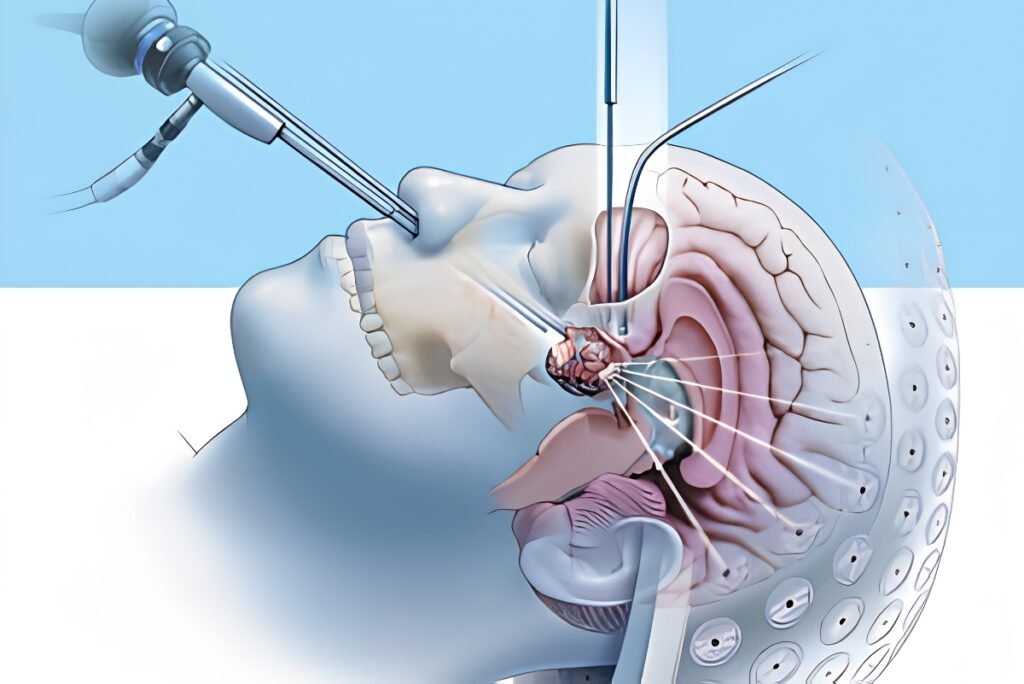
One of the most significant developments in neurosurgery is the increasing use of minimally invasive techniques. These approaches allow surgeons to access certain skull base lesions through smaller openings and natural anatomical pathways.
Endoscopic procedures utilize specialized cameras and instruments to provide detailed visualization while minimizing disruption to surrounding tissues. In selected cases, these techniques may reduce hospital stays, decrease post-operative discomfort, and accelerate recovery.
Not all skull base conditions are suitable for minimally invasive treatment, but for appropriately selected patients, these approaches offer valuable advantages.
Careful evaluation helps determine the most effective surgical strategy for each individual case.
Recovery and Rehabilitation Following Treatment
Recovery after skull base surgery varies depending on the complexity of the procedure and the patient’s overall condition. Close monitoring is essential during the early post-operative period to ensure stable neurological function.
Pain management, wound care, and observation for potential complications form important components of immediate recovery. Patients are encouraged to gradually resume activity based on medical guidance.
Some individuals may benefit from rehabilitation programs focusing on balance, speech, hearing, or facial nerve function. Regular follow-up appointments allow specialists to monitor healing and assess recovery progress.
A structured recovery plan helps optimize long-term outcomes and supports a safe return to daily activities.
Long-Term Monitoring and Neurological Wellness
Even after successful treatment, ongoing follow-up remains an important aspect of care. Regular clinical assessments and imaging studies help ensure continued neurological stability.
Long-term monitoring allows specialists to identify any changes early and address concerns before they become significant problems. Patients are encouraged to maintain healthy lifestyle habits that support neurological well-being.
Adequate sleep, balanced nutrition, physical activity, and stress management contribute to overall recovery and long-term health. Consistent medical follow-up also provides reassurance and supports sustained treatment success.
Specialized Expertise in Advanced Skull Base Care
Treating skull base disorders requires a combination of clinical experience, technological expertise, and multidisciplinary collaboration. The complexity of this anatomical region demands careful planning and precise surgical execution.
Dr. Sachin Giri provides advanced neurosurgical care focused on accurate diagnosis, personalized treatment planning, and patient-centered management. By utilizing modern techniques and evidence-based approaches, treatment strategies are designed to achieve the best possible outcomes while prioritizing patient safety.
Patients exploring options for skull base surgery in Mumbai often seek specialized expertise capable of managing complex neurological conditions with precision and confidence.
Advancing Neurological Health Through Specialized Skull Base Treatment
Skull base disorders present unique challenges due to their location near critical nerves, blood vessels, and brain structures. However, advancements in modern neurosurgery have significantly improved the ability to diagnose and treat these conditions effectively.
Through comprehensive evaluation, advanced surgical technology, and individualized treatment planning, many patients achieve meaningful symptom relief and improved quality of life. Early diagnosis remains one of the most important factors in successful treatment.
With specialized care, modern surgical techniques, and dedicated follow-up support, patients undergoing skull base surgery in Mumbai can benefit from effective treatment pathways designed to preserve neurological function and promote long-term recovery.