
Spinal listhesis correction surgery using screws & rods
Spinal listhesis (spondylolisthesis) is a condition where one or more vertebrae slip out of their normal position, leading to spinal instability, nerve compression, and back pain. Correction surgery using screws and rods, also known as spinal fusion with instrumentation, is performed to stabilize the spine, realign the vertebrae, and relieve nerve pressure.
Spinal listhesis (spondylolisthesis) is a condition where one or more vertebrae slip out of their normal position, leading to spinal instability, nerve compression, and back pain. Correction surgery using screws and rods, also known as spinal fusion with instrumentation, is performed to stabilize the spine, realign the vertebrae, and relieve nerve pressure.
Spinal Listhesis Correction Surgery Using Screws & Rods
Surgery Procedure
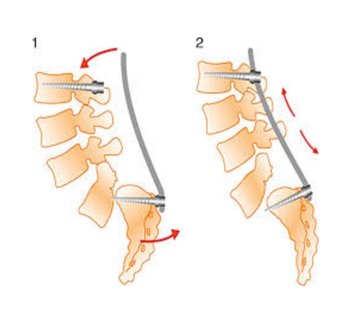
1. Incision : The surgeon makes an incision in the back to access the affected vertebrae.
2. Preparation : Damaged or degenerated disc material is removed, and bone surfaces are roughened to promote fusion.
3. Bone Grafting : Bone graft material (autograft from the patient’s hip or allograft from a bone bank) is placed between the vertebrae to stimulate bone growth and fusion.
4. Instrumentation : Screws and rods are carefully inserted to immobilize the vertebrae and maintain proper alignment while fusion occurs.
5. Closure : The incision is closed after ensuring correct placement and stabilization.
Minimally invasive techniques may be used in selected cases, allowing smaller incisions, less tissue damage, and faster recovery compared to traditional open surgery.
Benefits of Spinal Tumor Excision
Stabilizes the spine and prevents further vertebral slippage.
Relieves pressure on spinal nerves, reducing pain, numbness, and weakness.
Improves spinal alignment and posture.
Facilitates long-term spinal fusion and structural support.
Minimally invasive options provide quicker recovery and less postoperative discomfort.
FAQs
Patients with vertebral slippage causing pain, nerve compression, or instability that does not improve with conservative treatments are candidates.
Initial recovery typically takes 4 - 6 weeks, while complete fusion and full activity resumption may take 3 - 6 months.
Postoperative pain is managed with medications, nerve blocks, and physical therapy. Most patients report gradual improvement in pain as healing progresses.
Yes, the procedure is safe. Risks include infection, bleeding, nerve injury, or hardware-related complications.
Restore Spinal Stability and LivePAIN FREE
Don’t let spinal slippage limit your life. Book a consultation with our spine specialist today to explore advanced listhesis correction surgery with screws and rods.